Students usually pick a homework help service in a hurry, the night something is due. That is when a bad choice is most likely. This checklist is short enough to run in ten minutes, and it works on any service, ours included. At the end we mark ourselves against it.
We are the engineering team at DoMyProgrammingHomework.io. We sell this kind of help, so read the list with that in mind. Every outside rule we mention is quoted from its source.
The checklist
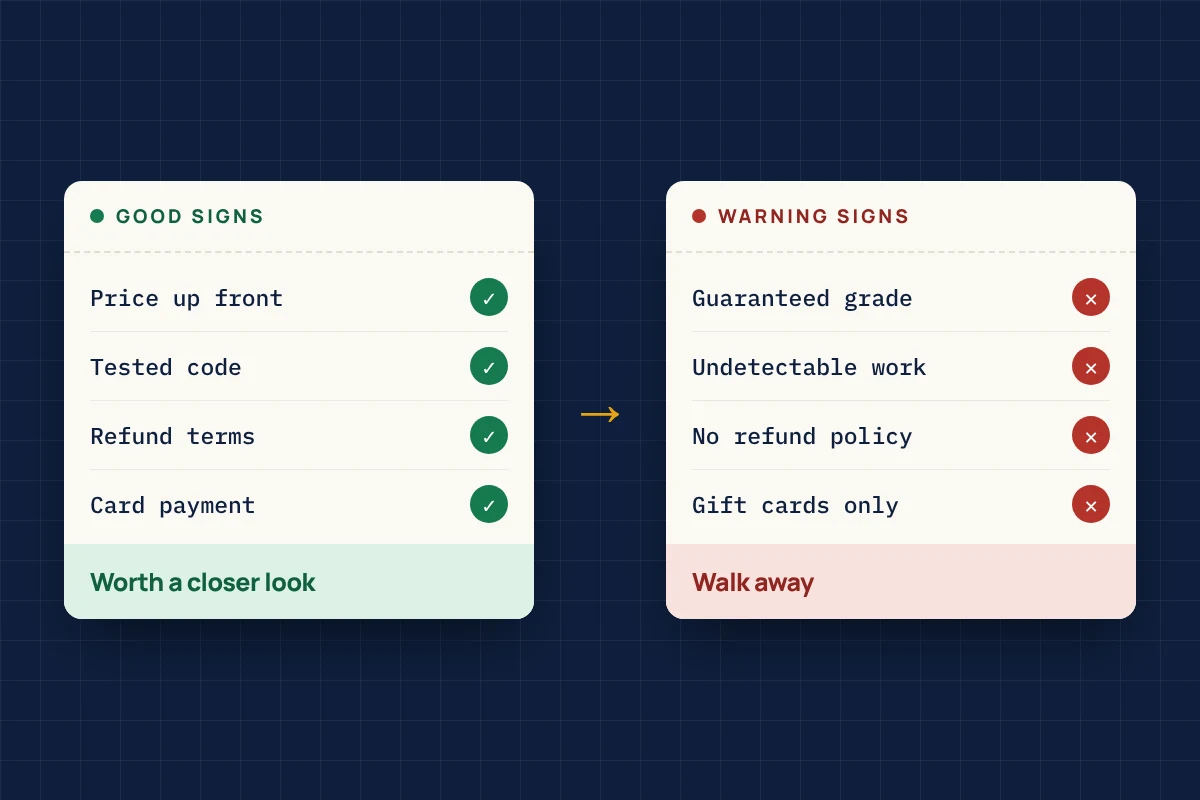
| Check | What good looks like | Warning sign |
|---|---|---|
| 1. Price | A range or price before you give contact details | “Contact us for a quote” and nothing else |
| 2. Who does the work | A named team or stated expertise you can question | No information at all |
| 3. Tested code | Tests, or a record of how the code was run | “100% correct” with no evidence |
| 4. Explanation | A written explanation of what the code does | Code only |
| 5. Refunds | Written conditions for getting money back | No policy, or one you can’t find |
| 6. Payment | A card processor you recognize | Gift cards, crypto or a bank transfer only |
| 7. Reviews | Reviews on a site the business doesn’t control | Perfect scores with no detail |
| 8. Your files | A stated time after which they are deleted | No privacy policy |
| 9. Deadlines and revisions | What happens if they are late, in writing | “Guaranteed” with no remedy |
| 10. Course rules | A plain statement of what they won’t do | “Undetectable” or “guaranteed grade” |
1. Is the price shown before you hand over your email?
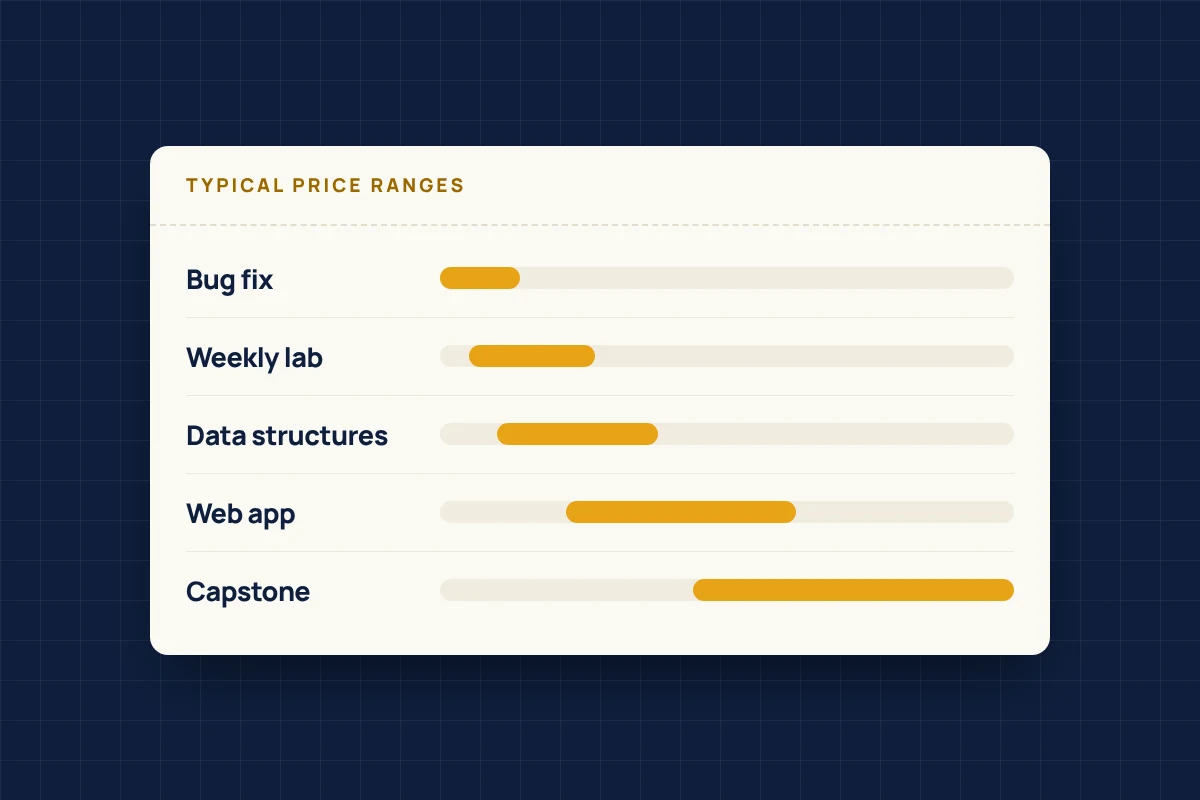
A service that knows its work can price it. If the only route to a number is a chat with a salesperson, you are being qualified, not quoted. Look for typical prices on the page, or a tool that gives a range from your files.
2. Who does the work?
You are paying for an engineer’s time. Ask who it is: their field, their level, how they are checked. A real service can answer without sending you a stock photo.
3. Is the code tested?
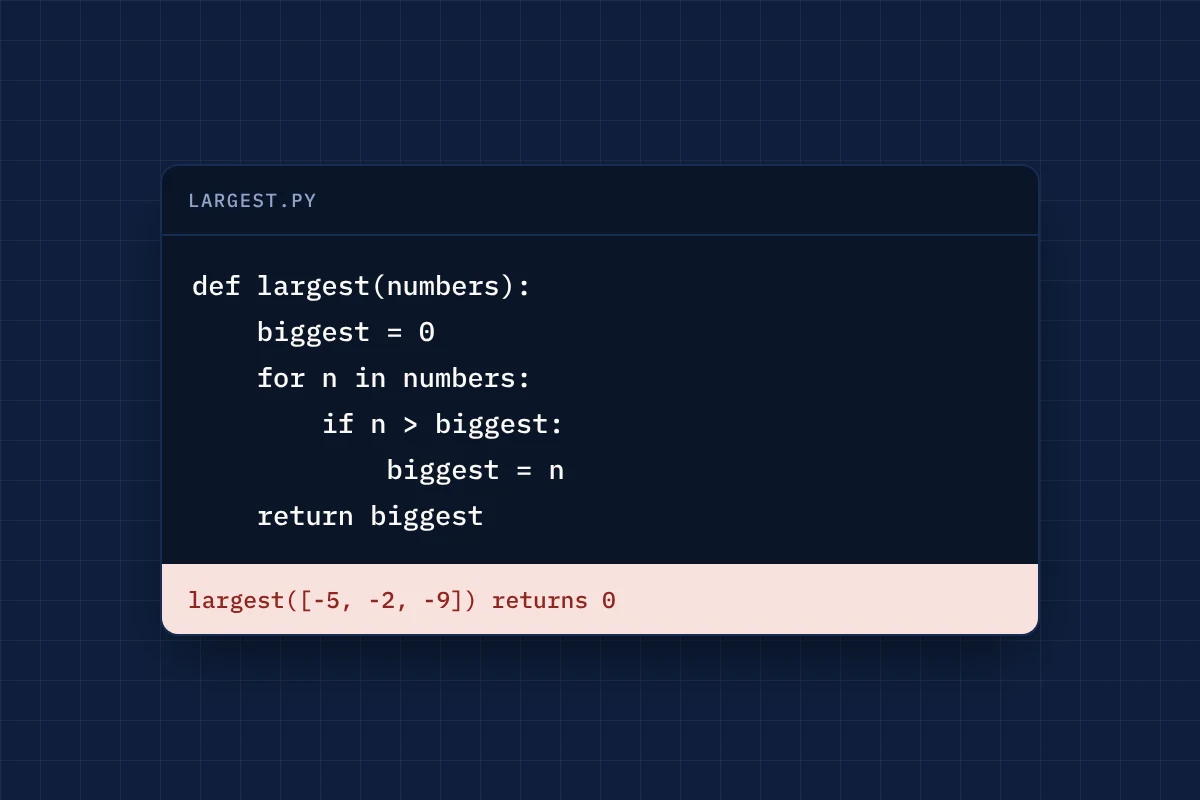
Working on the writer’s laptop is not the same as working. Ask for the tests or the run log. This matters most when your course uses an automatic grader, where one extra space fails a test. We explain that in why code works locally but fails the autograder.
4. Do you get an explanation?
Code you can’t explain is a risk to you. A written explanation of each part is what turns a file into something you can learn from and answer questions about.
5. What do the refund terms say?
Read them before you pay, not after. They should say what happens if the work is late, if it does not meet the brief, and if you cancel early.
Your card gives you a backstop. The US Federal Trade Commission says you can dispute charges for things that “weren’t delivered as agreed”, and that your letter should reach the card issuer “within 60 days after the first bill with the error was sent to you.”
6. How do you pay?
The FTC’s advice is direct: “Paying by credit card best protects you and your money in case of a scam, or if something else goes wrong.” A service that takes cards through a known processor never needs to see your card number. A service that wants gift cards or a transfer is taking that protection away.
7. Can you trust the reviews?
Be careful here. Fake reviews are common enough that the FTC wrote a rule against them. In August 2024 it announced a rule to “combat fake reviews and testimonials by prohibiting their sale or purchase”, including “AI-generated fake reviews”.
The FTC’s own tips for reading reviews:
- “Check how recent the reviews are, and watch for a burst of reviews over a short period of time.”
- “Check if the reviewer has written other reviews.”
- “Don’t assume that, just by looking, you can spot the difference between a real review and a fake one.”
Reviews on a platform the business does not control are worth more than quotes on its own page.
8. What happens to your files?
You are uploading coursework with your name and your university on it. The FTC’s guidance to businesses on personal data includes a rule you can hold a service to: “Keep only what you need for your business.” Look for a privacy policy that says when your files are deleted.
9. What happens when a deadline is missed?
Every service says it delivers on time. The question is what they owe you when they don’t. Look for it in writing, next to the revision terms.
10. What do they say about your course’s rules?
This is the check most services fail, because they avoid the subject.
Rules on outside help are real and they differ. Stanford’s Honor Code asks students to commit to “neither giving nor accepting unpermitted academic aid in any work that serves as a component of grading or evaluation”. MIT’s guidance on code says “Instructors determine the specific expectations around re-use of code in each class.”
Harvard’s CS50 shows how specific a course can be. Its syllabus lists as reasonable “Working with (and even paying) a tutor to help you with the course, provided the tutor does not do your work for you.” It lists as not reasonable “Paying or offering to pay an individual for work that you may submit as (part of) your own.”
So the honest position for any service is this: what you may do with the help depends on your course, and you are the one who has to check. A service that tells you its work is “undetectable”, or that there is nothing to check, is telling you it does not care what happens to you afterwards.
How we do on our own checklist
It would be odd to publish a checklist and not take it. Here is where we stand, with links so you can verify each line.
| Check | Where we stand |
|---|---|
| 1. Price | You upload your files and see a range before giving an email. Typical prices are on every service page and in our price guide. |
| 2. Who does the work | Engineers with at least 5 years of professional experience, accepted after a paid test assignment and a live technical interview. Our founder is named on the site. Individual engineers are not. |
| 3. Tested code | Edge-case tests and a run guide come with the work. |
| 4. Explanation | An explanation doc comes with every order. |
| 5. Refunds | Full refund for a missed deadline, for code that still does not meet the brief after revisions, or if you cancel before an expert starts. See our refund policy. |
| 6. Payment | Card payment through Stripe. We never see or store your full card number. |
| 7. Reviews | We have not published reviews on our own site yet. Our reviews page points to Trustpilot, which we do not control. |
| 8. Your files | Deleted 7 days after you upload them. See our privacy policy. |
| 9. Deadlines and revisions | Revisions are free and unlimited for 14 days against your original instructions. A missed deadline means a full refund. |
| 10. Course rules | We tell you to check them before you order. We won’t log in to school systems, take an exam for you or impersonate you. See academic integrity. |
Lines 2 and 7 are our weakest: we don’t name individual engineers, and we have no reviews on our own site yet. You may weigh those differently than we do.
Warning signs that end the conversation
- A guaranteed grade. Nobody controls your grader.
- “Undetectable” work. A service that sells this is selling you the risk.
- No refund policy. If it is not written down, it does not exist.
- Payment by gift card, crypto or transfer only. You lose the right to dispute the charge.
- A price far below everyone else. We listed what cheap offers usually leave out in our price guide.
See a price before you decide
Our own answer to check 1 is the tool below. It reads your files and shows a range. No email is needed to see it.
Related: programming assignment help, debug my code and code review, which is feedback on code you wrote yourself.
Questions students ask
How do I know if a programming homework help service is legitimate?
Check ten things before you pay: a price shown up front, who does the work, tested code, a written explanation, refund terms, card payment through a known processor, reviews on a site the business does not control, a privacy policy with a deletion date, written deadline terms, and a plain statement about course rules.
What are the warning signs of a bad homework help service?
A guaranteed grade, a claim that the work is undetectable, no written refund policy, payment only by gift card, crypto or bank transfer, and a price far below everyone else. Each one means the risk has been moved onto you.
Is it safe to pay for programming homework help online?
It is safer when you pay by credit card through a known processor. The US Federal Trade Commission says paying by credit card best protects you if something goes wrong, and that you can dispute charges for things that were not delivered as agreed.
Can I trust reviews of homework help services?
Treat them with care. The Federal Trade Commission announced a rule in August 2024 against fake reviews and testimonials, including AI-generated ones. It advises checking how recent reviews are, watching for a burst of them in a short time, and checking whether the reviewer has written other reviews.
Is using a programming homework help service allowed by my university?
That depends on your course. Policies differ: MIT says instructors determine the expectations in each class, and Harvard’s CS50 treats paying a tutor as reasonable but paying for work you submit as your own as not reasonable. Read your syllabus and honor code first.
What should I get back from a homework help service?
Working code with tests or a record of how it was run, a written explanation of what each part does, and instructions for running it. Code alone leaves you unable to explain your own submission.
Sources
- Federal Trade Commission: final rule banning fake reviews and testimonials (August 14, 2024)
- FTC consumer advice: how to evaluate online reviews, using credit cards and disputing charges and online shopping
- FTC: Protecting Personal Information, a guide for business
- Stanford University: Honor Code
- MIT Academic Integrity: writing code
- Harvard CS50 syllabus, Fall 2025: academic honesty
Upload the prompt and see a predicted budget in under a minute. A senior engineer confirms the final price.