The right answer depends on three things you can find out today: whether you can still pass, when the withdrawal deadline is, and what you would lose by dropping below full time. This guide goes through each, with real university and federal rules quoted word for word.
We are the engineering team at DoMyProgrammingHomework.io, not academic advisors. Use this to prepare for a conversation with yours.
The three outcomes, side by side
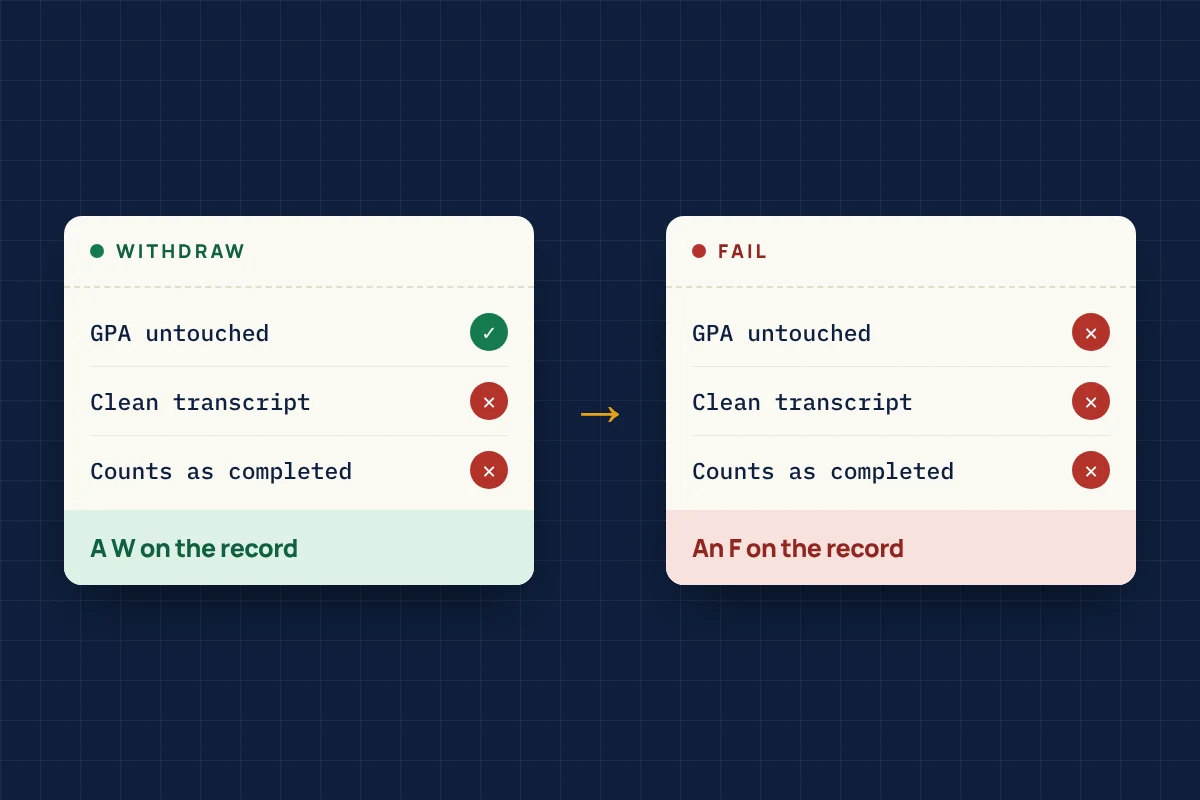
| Drop early | Withdraw later | Finish and fail | |
|---|---|---|---|
| On your transcript | Nothing | A W | The failing grade |
| Effect on GPA | None | None, at the schools we checked | Counts as zero |
| Counts as attempted for aid | Ask your school | Expect it to | Yes |
| Tuition back | Possibly | Ask your school | No |
| Available | Until the drop deadline | Until the withdrawal deadline | Always |
Dropping and withdrawing are not the same thing
Early in the term you can drop a course and it vanishes. Arizona State University says a class dropped by the deadline leaves “no record of your enrollment in the class on your official transcript”, and that doing so “may generate a 100% tuition refund for that class.”
After that date you can only withdraw. At Arizona State a withdrawal “will result in a grade of 'W' on your official transcript.” The good news follows straight after: “The grade of 'W' has no impact on your GPA.”
The University of Texas at Austin calls the same thing a Q-drop. It is for students who drop “after the 12th class day for academic reasons”, and the Q “will still display on your student record.”
So the first question is simply which side of the drop deadline you are on. Both dates are on your academic calendar.
What a withdrawal costs
A W protects your GPA. It can still cost you in four ways.
1. The pace your financial aid depends on
Federal student aid requires what the regulations call satisfactory academic progress. Part of it is pace, worked out by “dividing the cumulative number of hours the student has successfully completed” “by the cumulative number of hours the student has attempted.”
A withdrawn course sits on the bottom of that fraction and not on the top. Say you have attempted 15 credits and withdraw from a 3-credit course: you have completed 12 of 15, which is 80 percent. Your school sets the minimum, and its policy has to describe “how a student’s GPA and pace of completion are affected by course incompletes, withdrawals” and repeats. Read it, or ask the aid office to work out your number.
2. Full-time status
Withdrawing from one course can take you below the credits your scholarship, housing or insurance requires. The University of Texas says it plainly: “Students receiving financial aid should consult with the Texas One Stop to discuss potential impact on financial aid.”
3. Limits on how often you can do it
Some places cap withdrawals. The University of Texas page refers to students who “have already met the six total drop limits”. Check whether your university or state has a cap before you spend one.
4. The course is still ahead of you
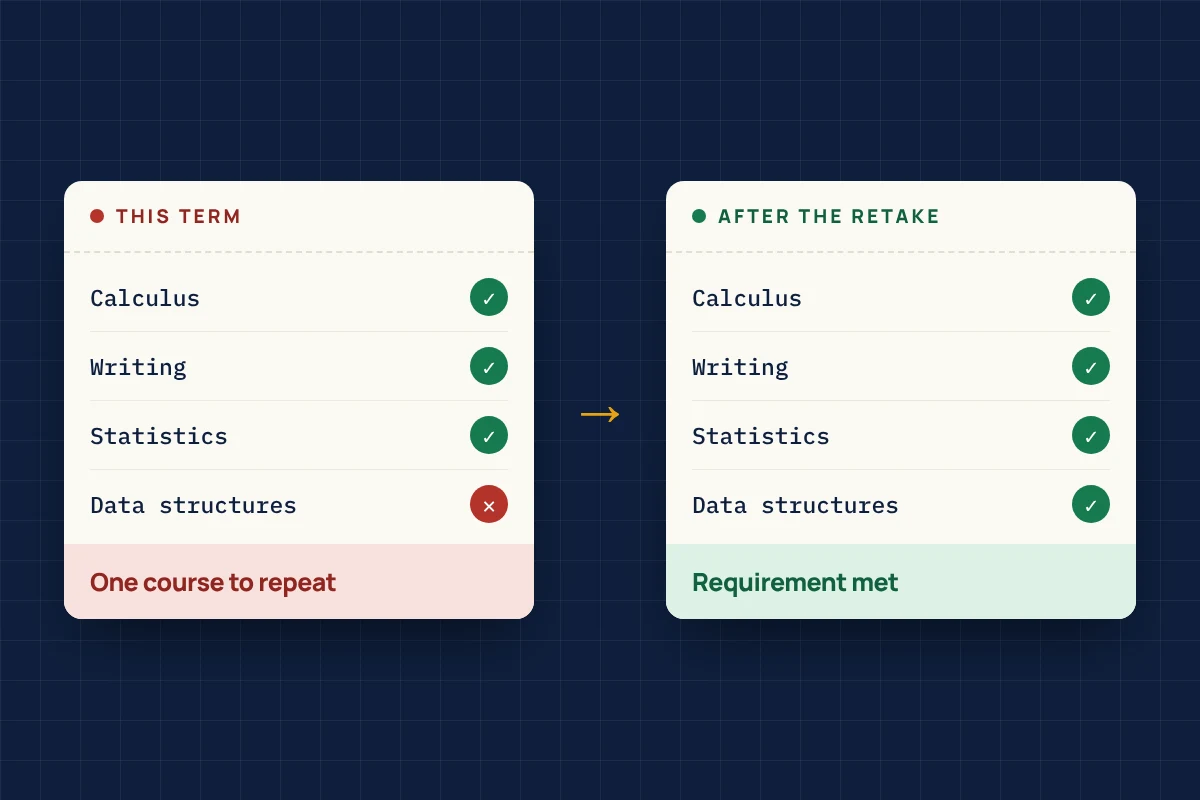
A W does not satisfy the requirement. If the course is required, you will take it again, and anything that depends on it waits. In computer science that can push back a whole chain of courses.
International students: ask before you drop anything
This one has consequences beyond grades. The US Department of Homeland Security says: “F-1 undergraduate students at a college or university must take at least 12 credit hours per term.” And: “You cannot drop below a full course of study unless your DSO approves it and updates your student record in SEVIS.”
There is a route for students in real difficulty. The same page says that when a student “is having specified initial academic difficulties, a temporary illness or medical condition”, “DSOs may authorize a reduced course load.” The approval has to come first. The University of Texas tells its own students: “International students should first consult with Texas Global.”
When staying in the course is the better choice
Withdrawing is not automatically the safe option. Stay if:
- You can still pass. Add up the points that are left. A hard final or one large project can move a grade further than you expect.
- A W would cost you aid or status. A low pass can be cheaper than a withdrawal that breaks your aid or your visa.
- Your school replaces the grade on a retake. Some universities remove a failed grade from the GPA when you repeat the course. We covered that in what happens if you fail a class in college.
How to decide this week
- Find both deadlinesThe last day to drop and the last day to withdraw are on the academic calendar.
- Work out whether you can passList the points still available and what you would need on each piece of work.
- Ask the instructorAsk what can still be submitted and whether late work counts. Their answer may settle it.
- Ask what a W costs youThe aid office for your pace, your advisor for your graduation date, the international office for your status.
- Decide with a day to spareDon’t leave the form to the last hour of the last day.
If one assignment is the reason
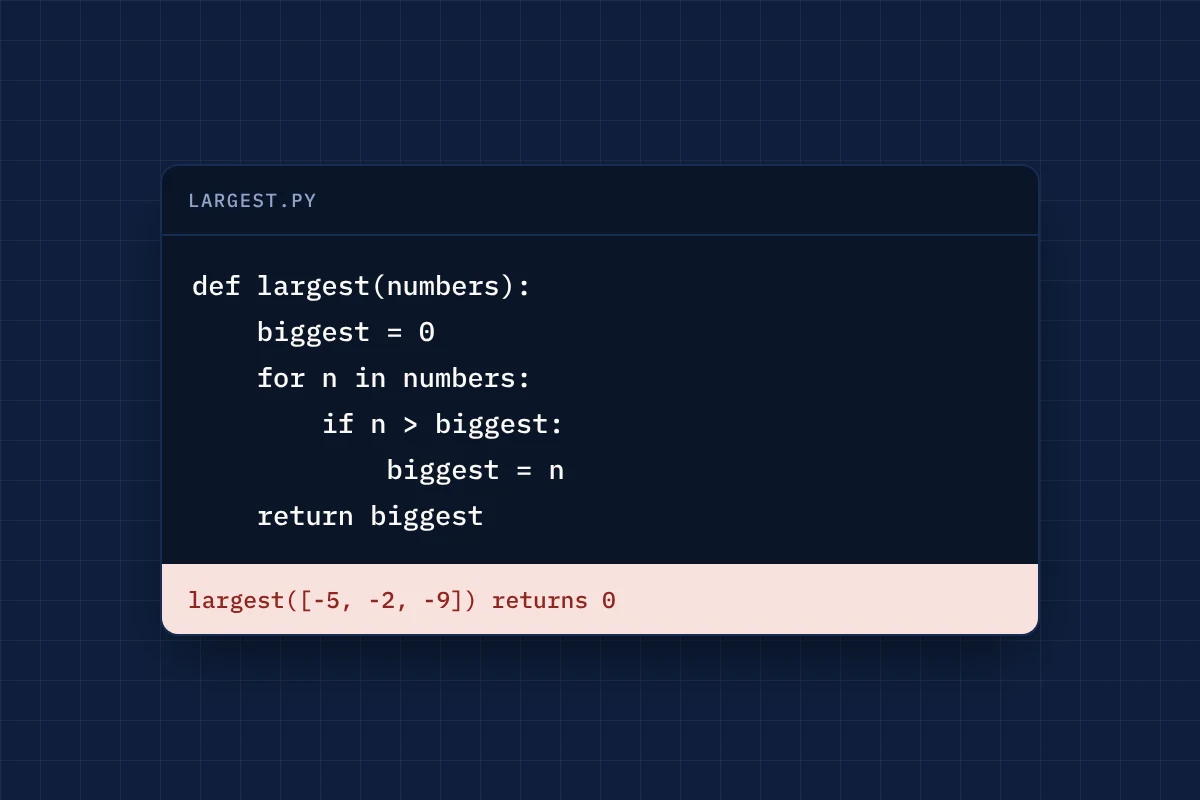
Often the whole decision comes down to a single programming project that is not working. If that is the only thing between you and a pass, it may be worth fixing before you withdraw.
Send us the assignment. A senior engineer writes or fixes it, tests it and explains the code line by line. We can’t promise you a grade, and nobody honestly can. See programming assignment help, data structures homework help and debug my code. Typical prices are in our price guide.
If the course has left you doubting the whole degree, read “I hate computer science” first.
Questions students ask
Is it bad to withdraw from a class?
A withdrawal protects your GPA and has costs of its own. At the universities we checked it does not count in your GPA. It does appear on your transcript, it counts as a course you attempted and did not complete, and it can take you below full time. Check those three things with your advisor and the aid office first.
Is it better to drop a class or fail?
For your GPA, dropping or withdrawing is better, because a fail counts as zero and a W does not count at all. Failing can still be the less costly choice if withdrawing would drop you below full time, break the pace your financial aid requires, or affect a student visa.
Does a W affect your GPA?
At the universities we checked, no. Arizona State states that the grade of W has no impact on your GPA, and the University of Texas at Austin does not include its dropped-course symbol in the grade point average. Confirm your own school’s rule in its catalog.
What happens if I drop a class in college?
It depends on the date. Before the drop deadline the course disappears from your record, and you may get tuition back. After it, you withdraw: a W goes on your transcript, your GPA is not affected, and the course still counts as attempted for financial aid.
How many withdrawals are too many?
There is no single number. Some universities and states set a limit: the University of Texas at Austin refers to a total of six drops. Look up your own school’s cap, and treat each withdrawal as something you can only do a few times.
Can international students withdraw from a class?
Only with approval if it takes them below full time. The US Department of Homeland Security says F-1 undergraduates must take at least 12 credit hours per term and cannot drop below a full course of study unless their designated school official approves it first.
Sources
- Arizona State University registrar: drop, add and withdraw and grades
- The University of Texas at Austin: academic Q-drops and grades
- Code of Federal Regulations, 34 CFR 668.34: satisfactory academic progress
- US Department of Homeland Security, Study in the States: full course of study
The federal student aid site and several other university pages would not load when we wrote this, so they are not quoted. We also could not open official pages on how graduate schools read a W, so this guide does not make a claim about that.
Upload the prompt and see a predicted budget in under a minute. A senior engineer confirms the final price.